Is Your Briggs Engine Drinking Too Much Fuel? Simple Checks That Can Cut Your Running Costs
Date Released: 1 May 2026 Category: Blog
Petrol isn't cheap, and during May and June when the mower is coming out regularly and working hard through fast-growing grass, the amount you're getting through can start to feel significant. Most people accept that a heavily used engine will use a reasonable amount of fuel, and that's true. But there's a difference between normal consumption and an engine that's genuinely using more than it should, and the gap between the two is often down to something simple and fixable.
If you've noticed that you're filling up more often than you used to, or more often than seems reasonable given how much mowing you're actually doing, it's worth working through a few basic checks before assuming it's just the nature of the machine.

If your consumption is noticeably beyond that range, or if it's increased significantly compared to previous seasons without any obvious change in how you're using the machine, something is worth investigating.
Checking the air filter takes about two minutes. Most Briggs engines have a simple cover on the side of the engine that lifts or unclips to reveal the filter element inside. If it looks grey, brown, or blocked with debris, cleaning or replacing it is the first and most cost-effective thing you can do. A new air filter is inexpensive and the effect on both fuel consumption and general running quality can be immediate.
Checking the spark plug is a straightforward job that requires only a spark plug spanner, which is usually included with the machine's toolkit or available cheaply. A plug that looks heavily fouled, with thick black deposits on the electrode, or one where the electrode looks worn and rounded rather than sharp, is due for replacement. Spark plugs are inexpensive and replacing one is one of those small investments that often pays for itself in fuel savings within a few mowing sessions.
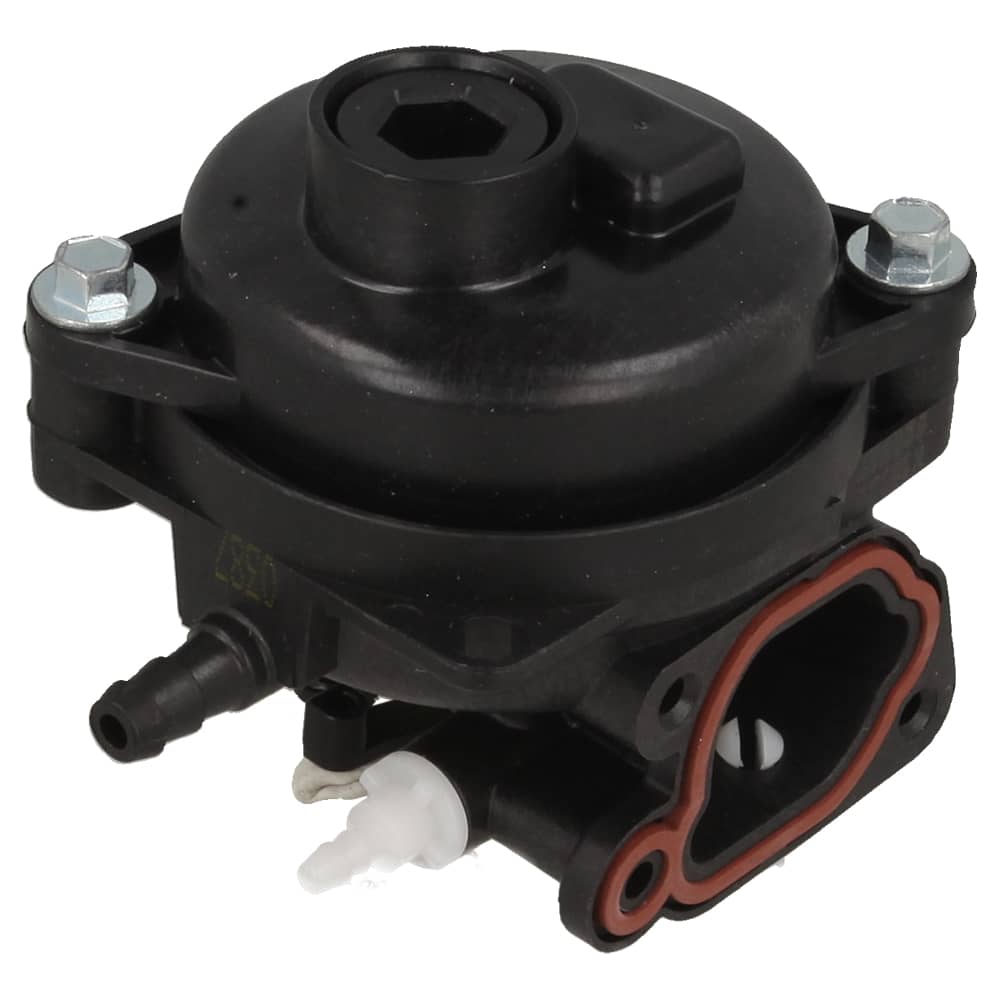
This is more common in machines that have been running on old or stale fuel, which can leave deposits inside the carburettor that affect how it meters fuel. A carburettor that's running rich will often cause the engine to feel slightly sluggish despite using plenty of fuel, and the exhaust may smell stronger than usual.
Carburettor adjustment and cleaning is something a local dealer or small engine workshop can do quickly and at modest cost, and it's often the missing piece when other checks haven't identified the problem.
If the higher fuel use coincides with a period of heavier-than-usual use, the machine may simply be responding to the demands being placed on it. Returning to a regular mowing schedule that keeps grass at a manageable length reduces the load on the engine and brings consumption back down naturally.
Fuel consumption that increases gradually over a season usually has a cause, and that cause is almost always something straightforward once you know where to look.
If you've noticed that you're filling up more often than you used to, or more often than seems reasonable given how much mowing you're actually doing, it's worth working through a few basic checks before assuming it's just the nature of the machine.
What Normal Fuel Consumption Actually Looks Like
Before deciding that something is wrong, it helps to have a rough sense of what to expect. A typical Briggs and Stratton single-cylinder engine on a lawn tractor or ride-on mower will use somewhere in the region of one to two litres of petrol per hour under normal working conditions. That figure will be towards the higher end when the engine is working hard, cutting long or thick grass, operating on slopes, or pulling a heavy attachment, and towards the lower end during lighter work on a well-maintained lawn.If your consumption is noticeably beyond that range, or if it's increased significantly compared to previous seasons without any obvious change in how you're using the machine, something is worth investigating.
The Air Filter: Small Part, Big Effect
The air filter is one of the most overlooked causes of poor fuel consumption, and it's also one of the easiest things to check. The engine needs a precise mixture of fuel and air to run efficiently, and that mixture is controlled by the carburettor based on the assumption that clean, unrestricted air is available. When the air filter is clogged, the engine can't draw in enough air, and the fuel-to-air ratio becomes unbalanced. The result is an engine running rich, using more fuel than necessary and often producing slightly more smoke than usual from the exhaust.Checking the air filter takes about two minutes. Most Briggs engines have a simple cover on the side of the engine that lifts or unclips to reveal the filter element inside. If it looks grey, brown, or blocked with debris, cleaning or replacing it is the first and most cost-effective thing you can do. A new air filter is inexpensive and the effect on both fuel consumption and general running quality can be immediate.
Spark Plug Condition
A spark plug that's past its best doesn't ignite the fuel mixture as efficiently as a healthy one, and the result is incomplete combustion that wastes fuel without producing the power it should. Over time, spark plugs accumulate deposits, the electrode wears, and the gap between the electrodes changes, all of which reduce the quality of the spark.Checking the spark plug is a straightforward job that requires only a spark plug spanner, which is usually included with the machine's toolkit or available cheaply. A plug that looks heavily fouled, with thick black deposits on the electrode, or one where the electrode looks worn and rounded rather than sharp, is due for replacement. Spark plugs are inexpensive and replacing one is one of those small investments that often pays for itself in fuel savings within a few mowing sessions.
The Carburettor and Fuel Delivery
If the air filter and spark plug are both in reasonable condition and consumption is still high, the carburettor is worth considering. The carburettor controls how much fuel is mixed with the incoming air, and a carburettor that has drifted out of adjustment or has a small internal fault can deliver more fuel than the engine actually needs.This is more common in machines that have been running on old or stale fuel, which can leave deposits inside the carburettor that affect how it meters fuel. A carburettor that's running rich will often cause the engine to feel slightly sluggish despite using plenty of fuel, and the exhaust may smell stronger than usual.
Carburettor adjustment and cleaning is something a local dealer or small engine workshop can do quickly and at modest cost, and it's often the missing piece when other checks haven't identified the problem.
How You're Using the Machine
It's also worth considering whether your usage patterns have changed. Cutting grass that's been left to grow longer than usual requires significantly more effort from the engine than keeping on top of growth with regular cuts, and fuel consumption rises accordingly. Mowing on slopes, towing a heavy collector, or operating in hot weather when the engine has to work harder to cool itself all push consumption upward.If the higher fuel use coincides with a period of heavier-than-usual use, the machine may simply be responding to the demands being placed on it. Returning to a regular mowing schedule that keeps grass at a manageable length reduces the load on the engine and brings consumption back down naturally.
A Fuel System Check Worth Doing
One final thing worth confirming is that there are no fuel leaks anywhere in the system. A slow drip from a fuel line connection or the base of the fuel tank can account for a surprising amount of fuel over the course of a season without being immediately obvious. Before and after a mowing session, a quick look under and around the engine for any sign of wet patches, fuel smell, or staining is a sensible habit that costs nothing.Fuel consumption that increases gradually over a season usually has a cause, and that cause is almost always something straightforward once you know where to look.