The Ultimate Guide to Amazing Briggs & Stratton Engine Performance
Date Released: 17 Nov 2025 Category: Blog
If you own a piece of outdoor power equipment—a lawnmower, a pressure washer, a generator, or a snow blower—chances are it’s powered by a rugged and reliable Briggs & Stratton engine. These engines are the workhorses of the yard, built to take a beating and keep running. However, even the toughest workhorse needs a little care.
You don't need to be a mechanic, and you don't need to speak fluent "engine-tech" to keep your machine in top shape. The secret to squeezing maximum performance, reliability, and lifespan out of your Briggs & Stratton engine boils down to four simple categories of maintenance. We'll walk through exactly what you need to do, why you need to do it, and how to get it done without breaking a sweat.
The gasoline you buy at the pump today is not the same gas your grandfather used. Modern fuel contains ethanol, which is great, but it’s a bit of a bully—it loves to suck up moisture from the air. Over time, that moisture and the broken-down ethanol leave behind a sticky, gooey varnish that clogs the tiny, crucial passages in your carburetor. When this happens, your engine sputters, struggles, or refuses to start at all.
More importantly, get religious about fuel stabilizer. This is your engine’s best friend. Every single time you fill up your gas can, add a high-quality stabilizer (like Briggs & Stratton's own Fuel Fit or a similar product) before you pour the gas in. This stops the chemical breakdown process right away. If you treat the fuel, it can last up to two years!
Just stick with regular 87 octane unleaded gasoline; don't waste money on premium gas, as it won't help your small engine. And be careful to avoid E15 and E85 gasoline (the stuff with more than 10% ethanol), as it can damage your fuel system.
Finally, when you’re done for the season, remember to stabilize the fuel in the engine itself. Add the stabilizer to the tank, then run the engine for about 5-10 minutes. This circulates the treated fuel through the entire system so that every part—the tank, the lines, and the carburetor—is protected from that nasty gunk.
Check It Constantly
Checking your oil is the quickest thing you can do to save your engine from a short life. You should do it before every single use, or at least after every 8 hours of work.
First, make sure the equipment is on a level surface. Clean the area around the oil fill so no dirt falls into the engine. Then, pull the dipstick out, wipe it clean, re-insert it fully (sometimes screwing it in), and check the level. The oil should be right up to the "FULL" mark. If it's low, add oil slowly, checking the level frequently to avoid overfilling. Too much oil can be just as harmful as too little!
Change It Annually (or By the Clock)
For most homeowners with walk-behind mowers, the simplest rule is to change the oil at the start of every season. If you use your equipment frequently (like 50 hours a year or more), change it then as well. For brand-new equipment, you must change the oil after the first 5 hours of use to flush out tiny metal shavings that occur as the engine breaks itself in.
What Kind of Oil?
Briggs & Stratton engines are four-stroke and require engine oil.
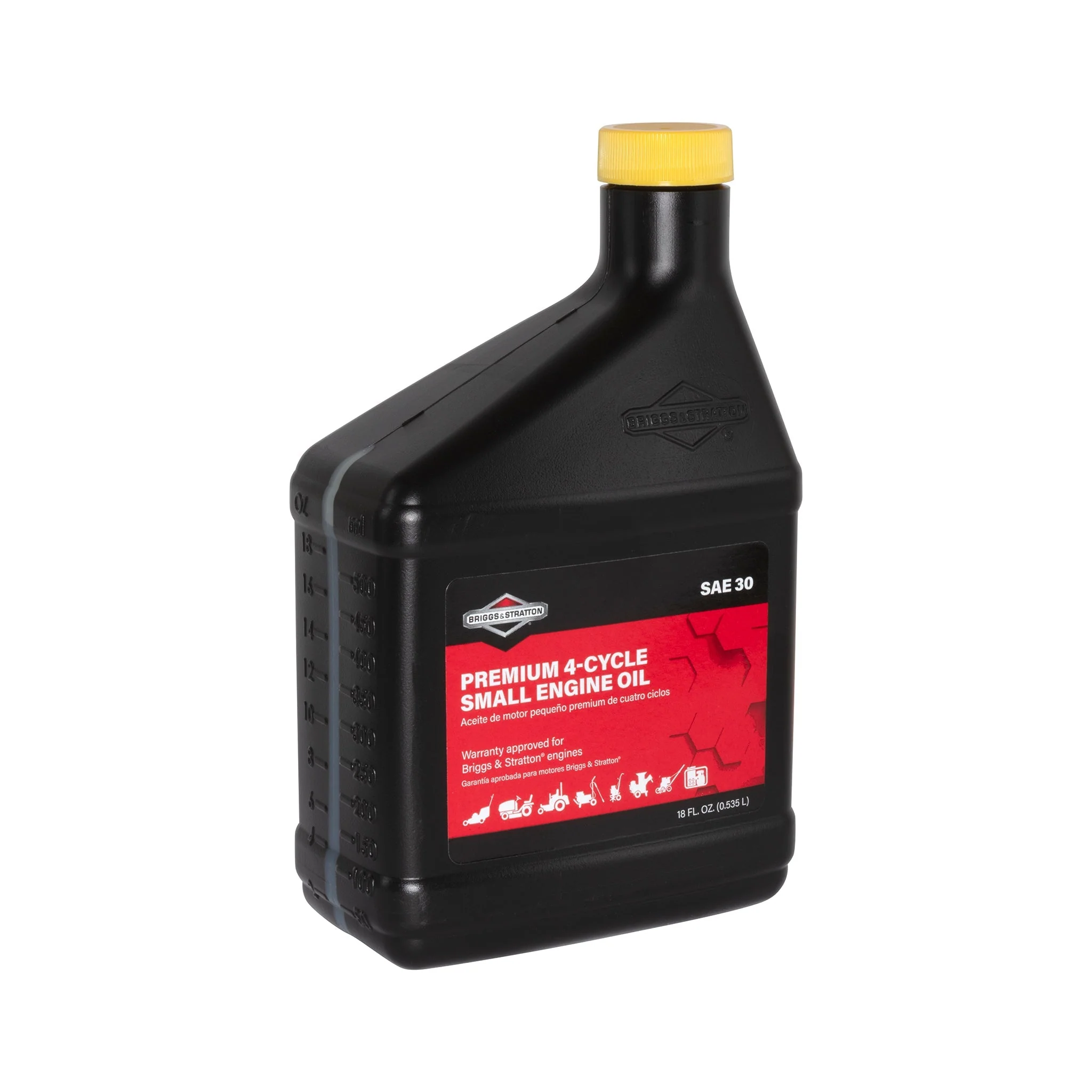
For most people, SAE 30 oil is the standard, most common choice for warm weather use (above 40∘F). However, if you want the best all-around protection and easier starting in cold weather, we highly recommend upgrading to Synthetic 5W-30 oil. It protects the engine better in extreme heat and flows smoothly in the cold. Just ensure the oil you choose is a high-quality detergent oil classified as "For Service SF, SG, SH, SJ" or higher.
The Air Filter: Why Clean Air Matters
Think of your air filter as a mask for your engine, stopping dust, dirt, and grass clippings from getting inside where they cause wear. A dirty filter literally chokes the engine, forcing it to run rough, lose power, and burn more fuel.
You should check the air filter often, especially if you’re using your equipment in dusty or grassy environments.
If your filter is a paper cartridge, gently tap out loose dirt. Do not use pressurized air, as that can rip the paper fibers. If the cartridge looks dirty, oily, or clogged, it's time to replace it.
If your filter is a foam sponge (pre-cleaner), you can often wash it in soapy water, squeeze it dry, then lightly coat it with fresh engine oil and squeeze out the excess.
A clean filter is one of the quickest ways to instantly restore lost power to your machine!
The Cooling Fins: Keep It Cool
Since Briggs & Stratton engines are air-cooled (they don't have a radiator like a car), they rely on air moving over metal fins on the engine block. If these fins get packed with grass, dirt, or debris, the engine can't shed heat, leading to severe overheating.
You should routinely clean the engine’s exterior, especially the areas around the flywheel and the cooling fins. Use a brush, rag, or compressed air to ensure that air can flow freely around the engine. Also, make sure the area around the muffler is always clean and free of dry grass—that's a major fire hazard waiting to happen.
The Spark Plug Tune-Up
Once a season, it’s a great idea to check your spark plug. First, remember to disconnect the spark plug wire and secure it away from the plug to prevent any accidental starting.
When you remove the plug, look at the tip:
A tan or light gray color means everything is working perfectly. A black, sooty, or wet tip usually means the engine isn’t burning fuel cleanly. If the plug looks bad, or if your engine has been running rough, the easiest thing to do is simply replace it with a new plug recommended for your engine model. They are cheap, easy to install, and provide a reliable, hot spark that makes starting a breeze, especially in the cold.

You don't need a degree in engineering to follow a maintenance schedule. Here's a simple, non-technical calendar to keep your engine happy:
Every Time You Use It
Check the Oil Level: This takes 30 seconds and is the ultimate insurance policy.
Wipe Down the Engine: Clear away any fresh grass or debris from the cooling fins and muffler area.
Once Per Season (Spring Tune-Up)
Change the Engine Oil: Always with a high-quality, recommended oil. Replace or Clean the Air Filter: Fresh air equals maximum power. Replace the Spark Plug: Ensures easy starting all season long. Inspect the Engine: Check all belts and cables for wear or damage.
Year-Round
Use Fuel Stabilizer: Add it every time you fill your gas can.
Happy motoring!
You don't need to be a mechanic, and you don't need to speak fluent "engine-tech" to keep your machine in top shape. The secret to squeezing maximum performance, reliability, and lifespan out of your Briggs & Stratton engine boils down to four simple categories of maintenance. We'll walk through exactly what you need to do, why you need to do it, and how to get it done without breaking a sweat.
1. The Fuel Factor: Why Fresh Gas is King
The single biggest enemy of a small engine is stale fuel. This is the number one reason why engines are hard to start after sitting for the winter, or why they run rough halfway through the season.The gasoline you buy at the pump today is not the same gas your grandfather used. Modern fuel contains ethanol, which is great, but it’s a bit of a bully—it loves to suck up moisture from the air. Over time, that moisture and the broken-down ethanol leave behind a sticky, gooey varnish that clogs the tiny, crucial passages in your carburetor. When this happens, your engine sputters, struggles, or refuses to start at all.
Your Simple Fuel Solution
You can easily dodge this common pitfall. Always buy fresh, clean gasoline. If you buy too much, it goes bad before you can use it all, so only purchase what you can reasonably use within a month.More importantly, get religious about fuel stabilizer. This is your engine’s best friend. Every single time you fill up your gas can, add a high-quality stabilizer (like Briggs & Stratton's own Fuel Fit or a similar product) before you pour the gas in. This stops the chemical breakdown process right away. If you treat the fuel, it can last up to two years!
Just stick with regular 87 octane unleaded gasoline; don't waste money on premium gas, as it won't help your small engine. And be careful to avoid E15 and E85 gasoline (the stuff with more than 10% ethanol), as it can damage your fuel system.
Finally, when you’re done for the season, remember to stabilize the fuel in the engine itself. Add the stabilizer to the tank, then run the engine for about 5-10 minutes. This circulates the treated fuel through the entire system so that every part—the tank, the lines, and the carburetor—is protected from that nasty gunk.
2. Oil: The Engine's Lifeblood
Oil is much more than just a slipperiness agent; it’s a coolant, a cleaner, and a sealant all wrapped into one. Running your engine with dirty, low, or incorrect oil is the fast lane to a cracked engine block or seized components.Check It Constantly
Checking your oil is the quickest thing you can do to save your engine from a short life. You should do it before every single use, or at least after every 8 hours of work.
First, make sure the equipment is on a level surface. Clean the area around the oil fill so no dirt falls into the engine. Then, pull the dipstick out, wipe it clean, re-insert it fully (sometimes screwing it in), and check the level. The oil should be right up to the "FULL" mark. If it's low, add oil slowly, checking the level frequently to avoid overfilling. Too much oil can be just as harmful as too little!
Change It Annually (or By the Clock)
For most homeowners with walk-behind mowers, the simplest rule is to change the oil at the start of every season. If you use your equipment frequently (like 50 hours a year or more), change it then as well. For brand-new equipment, you must change the oil after the first 5 hours of use to flush out tiny metal shavings that occur as the engine breaks itself in.
What Kind of Oil?
Briggs & Stratton engines are four-stroke and require engine oil.
For most people, SAE 30 oil is the standard, most common choice for warm weather use (above 40∘F). However, if you want the best all-around protection and easier starting in cold weather, we highly recommend upgrading to Synthetic 5W-30 oil. It protects the engine better in extreme heat and flows smoothly in the cold. Just ensure the oil you choose is a high-quality detergent oil classified as "For Service SF, SG, SH, SJ" or higher.
3. The Engine's Lungs: Air Filters and Cooling Fins
Your engine has to breathe to make power. If it’s sucking in dirty air or can’t cool itself down, its performance will tank and it’ll wear out fast.The Air Filter: Why Clean Air Matters
Think of your air filter as a mask for your engine, stopping dust, dirt, and grass clippings from getting inside where they cause wear. A dirty filter literally chokes the engine, forcing it to run rough, lose power, and burn more fuel.
You should check the air filter often, especially if you’re using your equipment in dusty or grassy environments.
If your filter is a paper cartridge, gently tap out loose dirt. Do not use pressurized air, as that can rip the paper fibers. If the cartridge looks dirty, oily, or clogged, it's time to replace it.
If your filter is a foam sponge (pre-cleaner), you can often wash it in soapy water, squeeze it dry, then lightly coat it with fresh engine oil and squeeze out the excess.
A clean filter is one of the quickest ways to instantly restore lost power to your machine!
The Cooling Fins: Keep It Cool
Since Briggs & Stratton engines are air-cooled (they don't have a radiator like a car), they rely on air moving over metal fins on the engine block. If these fins get packed with grass, dirt, or debris, the engine can't shed heat, leading to severe overheating.
You should routinely clean the engine’s exterior, especially the areas around the flywheel and the cooling fins. Use a brush, rag, or compressed air to ensure that air can flow freely around the engine. Also, make sure the area around the muffler is always clean and free of dry grass—that's a major fire hazard waiting to happen.
4. Ignition System: The Spark of Performance
The spark plug is what ignites the air-fuel mixture to create power. A worn, dirty, or incorrectly spaced (gapped) spark plug can cause difficult starting, rough idling, and, you guessed it, poor power.The Spark Plug Tune-Up
Once a season, it’s a great idea to check your spark plug. First, remember to disconnect the spark plug wire and secure it away from the plug to prevent any accidental starting.
When you remove the plug, look at the tip:
Your Simple Maintenance Calendar
You don't need a degree in engineering to follow a maintenance schedule. Here's a simple, non-technical calendar to keep your engine happy:
Every Time You Use It
Wipe Down the Engine: Clear away any fresh grass or debris from the cooling fins and muffler area.
Once Per Season (Spring Tune-Up)
Year-Round
Final Thoughts
Your Briggs & Stratton engine is designed for durability, but it needs a little routine love to deliver amazing performance year after year. By focusing on these four key areas—fresh fuel, clean oil, clean air, and a hot spark—you eliminate 90% of all common small engine problems. You don't need fancy tools or deep technical knowledge; you just need a commitment to simple, seasonal maintenance. Take care of your Briggs, and it will take care of your work.Happy motoring!